Maximize Space in a Shared Bedroom for Toddlers with Smart Design Tips
Sharing a bedroom can be a challenge for toddlers, especially when space is limited. You want to create a room that feels comfortable, safe, and fun for both children without overcrowding or chaos. The good news is that with smart design choices, you can make the most of every inch and turn a shared bedroom into a cozy, organized haven. This guide will walk you through practical steps to maximize space, balance style and function, and create a room your toddlers will love.

Plan the Layout for Flow and Function
Start by measuring the room and noting the location of doors, windows, and closets. This helps you understand the usable space and avoid blocking natural light or access points.
Use vertical space: Think about bunk beds or loft beds to free up floor space for play or storage underneath.
Create zones: Divide the room into sleeping, playing, and storage areas. This helps toddlers understand boundaries and keeps the room organized.
Leave clear pathways: Ensure there is enough space for toddlers to move safely between furniture without tripping or bumping into things.
For example, placing beds along opposite walls or in an L-shape can open up the center of the room for a play rug or activity table.
Choose Space-Saving Furniture
Furniture that serves multiple purposes or fits well in small spaces is key to maximizing room.
Bunk beds or twin-over-twin beds save floor space and add a fun element for toddlers.
Beds with built-in drawers provide extra storage for clothes, toys, or bedding.
Compact dressers or shelves that fit under windows or in corners use awkward spaces efficiently.
Foldable or stackable chairs and tables can be tucked away when not in use.
Avoid bulky furniture that overwhelms the room. Instead, look for pieces with clean lines and light colors to keep the space feeling open.
Use Smart Storage Solutions
Toddlers have lots of toys, books, and clothes, so storage is essential to keep the room tidy.
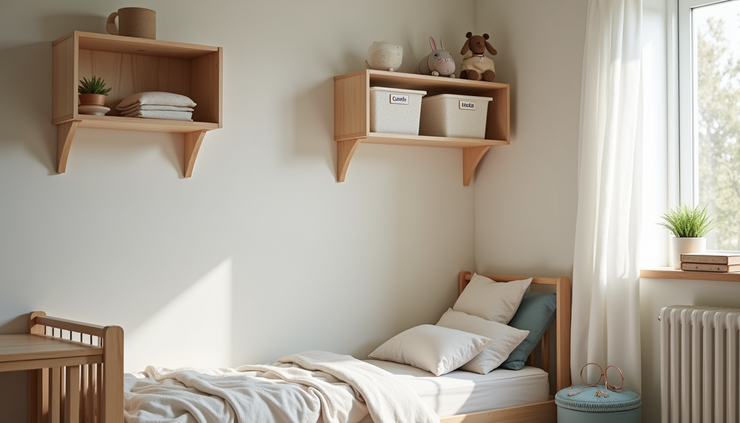
Bins and baskets: Use labeled bins for toys and books. Clear or colorful bins make it easy for toddlers to find and put away items.
Wall-mounted shelves: These keep items off the floor and create display space for favorite books or decorations.
Under-bed storage: Utilize rolling bins or drawers under beds for seasonal clothes or extra toys.
Hooks and pegs: Install these at toddler height for hanging backpacks, hats, or dress-up clothes.
Organizing storage by category and keeping frequently used items accessible helps toddlers learn to tidy up independently.
Pick a Cohesive Style That Feels Calm and Inviting
A shared bedroom should feel welcoming and balanced for both toddlers. Choose a style that is playful but not overwhelming.
Neutral base colors with pops of bright accents create a cheerful yet calm atmosphere.
Soft textiles like rugs, curtains, and cushions add warmth and comfort.
Personal touches such as framed artwork, name plaques, or themed bedding make the space feel special for each child.
Durable materials that are easy to clean and maintain are practical for toddler rooms.
For example, a soft gray wall with colorful animal prints and matching bedding can create a unified look that appeals to both toddlers.
Maximize Lighting and Ventilation
Good lighting and airflow improve the room’s comfort and usability.
Natural light: Keep windows clear of heavy drapes to let in daylight.
Layered lighting: Use ceiling lights for general illumination, nightlights for bedtime comfort, and task lamps for reading or play.
Ventilation: Ensure the room has fresh air circulation to keep it healthy and fresh.
Consider blackout curtains for nap times and soft nightlights to help toddlers feel secure after dark.
Create Play and Learning Areas
Toddlers need space to explore and learn, so dedicate a small area for play and activities.
Soft rugs or mats define the play zone and cushion falls.
Low shelves or bins keep toys within reach.
Small tables and chairs encourage drawing, puzzles, or snacks.
Interactive wall decals or chalkboards add fun without taking up floor space.
This setup encourages independent play and keeps toys contained in one area.
Safety First in Every Design Choice
Toddlers are curious and active, so safety must be a priority.
Secure furniture to walls to prevent tipping.
Use cordless window coverings to avoid strangulation hazards.
Cover electrical outlets and keep cords out of reach.
Choose non-toxic paints and finishes.
Avoid sharp corners on furniture or use corner guards.
Regularly check the room for hazards as toddlers grow and their abilities change.
Final Thoughts on Creating a Functional Shared Bedroom
Designing a shared bedroom for toddlers is ultimately about more than fitting two children into one space—it’s about creating an environment where they can rest, play, and grow together comfortably.
Thoughtful planning, flexible furniture, and intentional organization allow the room to evolve as your toddlers do, supporting their independence while maintaining a sense of calm and order.
When each design choice balances practicality with warmth, the bedroom becomes a place that encourages cooperation, creativity, and a feeling of belonging.
With the right approach, a shared toddler bedroom isn’t just functional—it becomes a nurturing space where daily routines feel easier and shared moments feel special.


